
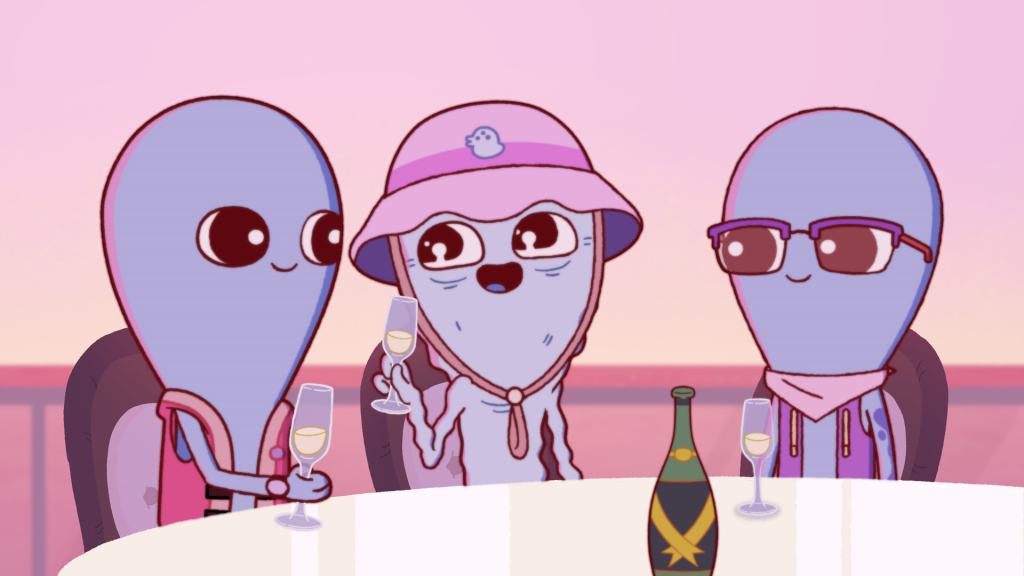
It may seem farfetched, but this review begins with me browsing pages on Facebook. I first stumbled upon a page run by a man named Nathan W. Pyle, named after himself. This was years ago, but I still remember–albeit faintly–the adorable alien figures he would draw in relatable scenarios. They would wear socks, own pets, get depressed, and enjoy leisurely activities. He called the world that the aliens–beings as they are called–lived in Strange Planet. I was, being so young, intrigued by the world that Pyle created. But what stuck out the most was the language that was incorporated into the drawings and comics he created.
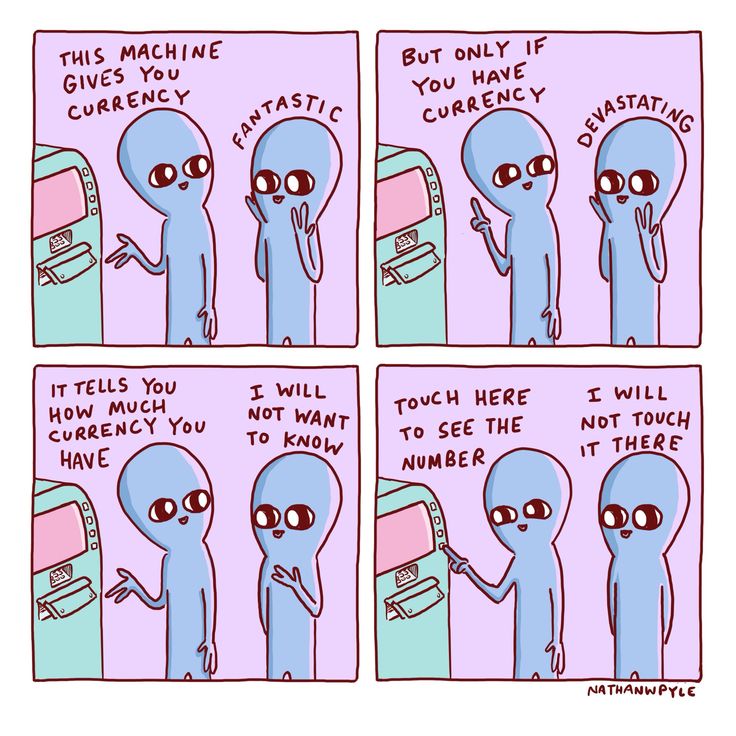
Image by Nathan W. Pyle
Before the TV series was released, Pyle released a book of comics that were mainly what he posted online, with some extra comics that were not released, under the same name: Strange Planet. I currently own a copy of the book, which more-or-less offers similar experience to reading the comics on his page or Twitter. Some of the beings were parents, some were working in their respective occupations, some were dealing with owning pets (and the fact that they may have been allergic to them). It’s nice to have physical copies of comics like this. There was no true continuity among the characters–no real story was being told. The book could be summarized with “This particular scenario is relatable, but we are going to communicate it in sophisticated diction.”
So how does this comic format translate into an Apple TV+ show that spans ten episodes? How do these simple comics create a universe that is conveyed through animation?
Strange Planet (the show) premiered on Apple TV+ on August 9th, 2023, releasing all ten episodes of its first season within about one month–par for the course for most streaming originals. The series focuses on the beings and the orb (planet) they live on. Much like their counterparts in the comics, the beings are nameless and (seemingly) genderless. Each episode holds a contained story with more episodic elements with some of the main characters. With some characters, like the manager of a restaurant and their workers, there are much bigger stakes. It is welcomed to watch a more grounded, episodic series among the sea of one-off shows and lackluster animated series.
What stands out the most about the show is the relatability of the characters and the scenarios that they find themselves in on their orb. There are love stories, stories of self-doubt and questioning one’s purpose, high school drama, parenthood–it seems that the showrunners were crossing things off a list when creating the show. There seems to be something for everyone in this series.
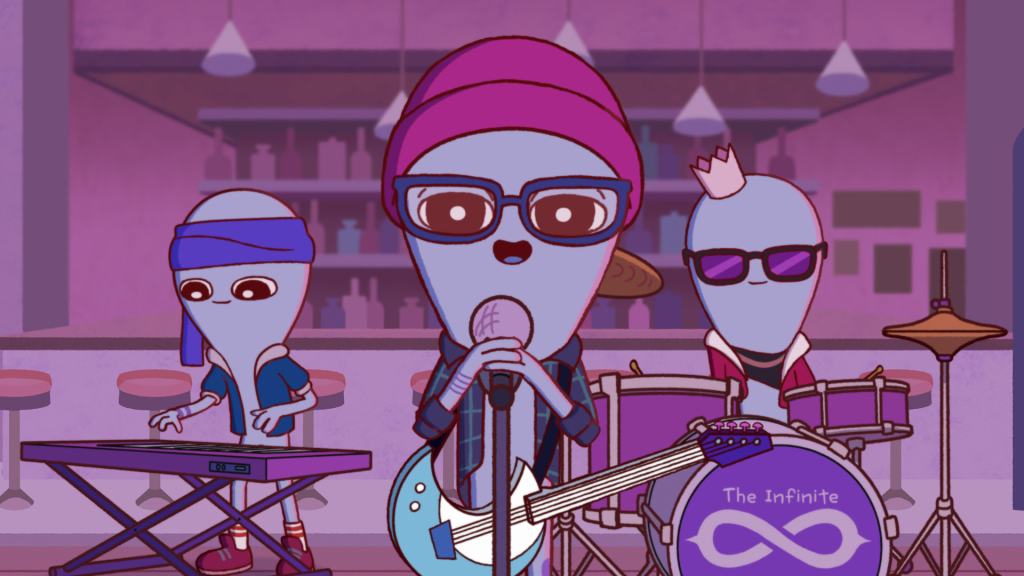
Image via Apple TV+, Nathan W. Pyle
Unlike the webcomic, the beings are more distinguishable in their appearance, adding accessories to their looks. This helps with reoccurring characters in the series, especially the restaurant staff. They have hats, scarfs, glasses, and shoes over their foot tubes.
The beings do not necessarily have their own language comparable to the likes of IPs such as Star Trek’s Klingon or Avatar’s Na’vi. Rather, they speak “English.” The reason I placed quotations around that word is because Pyle, like many writers, does something unique with his writing of dialogue. The language is slightly more complex, replacing common words with their statelier, more “alien” counterparts. For example, instead of wearing “socks,” the beings don “foot tubes.” “Dreams” are “pleasant nonsense” (which is an apt description of them, especially for dreams like mine). “Parents” are called “life givers.” These and other examples are found throughout both the comics and the series.
The series’ use of language is quite charming–the characters are not themselves dignified, really, but they have a way of using existing English to, while making them seem other-worldly, adds to the relatability that the show is going for. While they are not themselves human, anyone listening to them converse will at least understand what they are saying, and find appeal in their interpretations of common earthly objects and concepts. I would not necessarily say that the reliance on these language conventions is a shortcoming, but rather, one can grow accustomed to it as the characters speak throughout the series.
As said before, the characters themselves are defined by their outward appearances (clothing) and occupation, and not much else. There are no names or specific genders given to these characters. While this makes them universal in their own right, one may find a disconnect from the characters in this regard. It is clear that the message behind this choice is to allow for viewers to see themselves in the scenarios that the beings find themselves in, however, the timelessness of these characters are lost with the lack of labels for them. Instead of having names to call them, they are referred to–even in the ending credits of the show–as “Being 1”, “Being 2”, “Bartender”, etc. This can prove as a pitfall and work against the show in terms of the relatability that Pyle is clearly going for. I also cannot conclude if there is an ulterior motive behind this, whether subjects or themes such as LGBT will come up in later installments, though it may be an avenue to explore for certain episodes. Because it is not the primary focus of the show, it does not appear to be an issue overall.
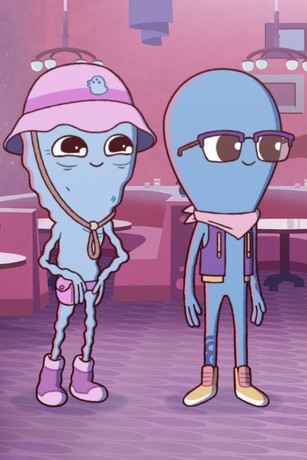
Image via Apple TV+, Nathan W. Pyle
I had asked myself a very important question concerning the show as I was watching: “Who is the target audience of the show?” My first guess would have been adults, since many of the scenarios–having a job, relationships (romantic and otherwise), and dealing with loss–seem to associate most with an older audience. However, the show also deviates into teenage issues, such as high school, dances, wishing for a pet, and relating to friends about their favorite television series. The show mainly seems to be aimed at adults who just want to get through life or could use the assurance that they are not the only one who is going through a particular patch in life. However, the show does have something for everyone, despite a clearer target audience. The episodes vary in terms of their main topics, which are explained at the start of each episode through narration.
The current rating on IMDB for Strange Planet, as of the time I am typing this out, is a 6.4/10 and a 82/100 on Rotten Tomatoes. When I first began constructing this review, it was a 5/10. It seems that more and more viewers are either finally watching the series or turning around their initial opinions. The way I see it, Strange Planet is an engaging romp that many beings can see themselves in. It has yet to scratch the surface of material that can be covered in a show of this caliber. Its strengths lie in the understanding of human nature, despite being not-so-human in appearance. There is no official word for the greenlighting of a second season, but one can hope that, with more episodes, a new set of beings is able to provide more perspective into the day-to-day of living.
All images used are copyright of Strange Planet (Apple TV+, Nathan W. Pyle).




 colorberd.com
Leave a comment